Drug development for child brain cancer
Summary
Brain tumours are the most common solid tumours in children. Even a non-cancerous tumour can cause serious harm if it presses on parts of the brain that control movement, vision or other essential functions. Survival varies widely by tumour type.
Treatment decisions are especially difficult for the very young children. Radiotherapy can affect the developing brain, so doctors may delay or avoid it when possible. Some childhood brain cancers also have biological features that differ from those seen in adults, which can make it harder to find suitable drugs among existing treatments.
Getting a drug to the tumour is a challenge in its own right. The blood–brain barrier controls what passes from the bloodstream into the brain. In some childhood brain tumours, much of that barrier remains intact. A compound may kill tumour cells in the lab and still fail to reach them in the brain at a high enough concentration to work.
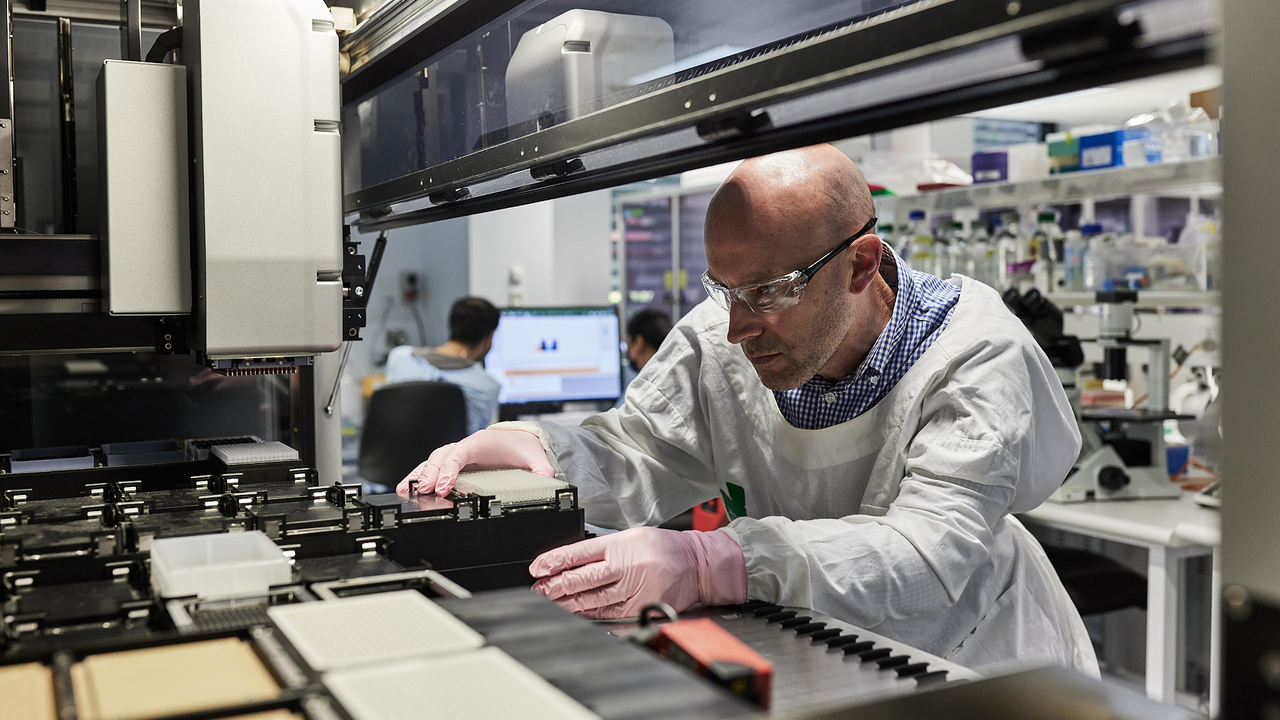
Brain cancer is a priority for THINK (Therapeutic Innovations for Kids), a drug discovery initiative at Children’s Cancer Institute that starts with the biology of childhood cancers. Its technology allows researchers to test many compounds quickly against cancer cells, rule out those that show little promise and focus on the ones worth developing further. For brain cancers, that means asking early whether a promising compound can both act on the tumour and reach it. The aim is to shorten the time it takes to identify drug candidates that can move towards clinical trials for children.
Our story
THINK began with a conversation over dinner at a conference in Boston.
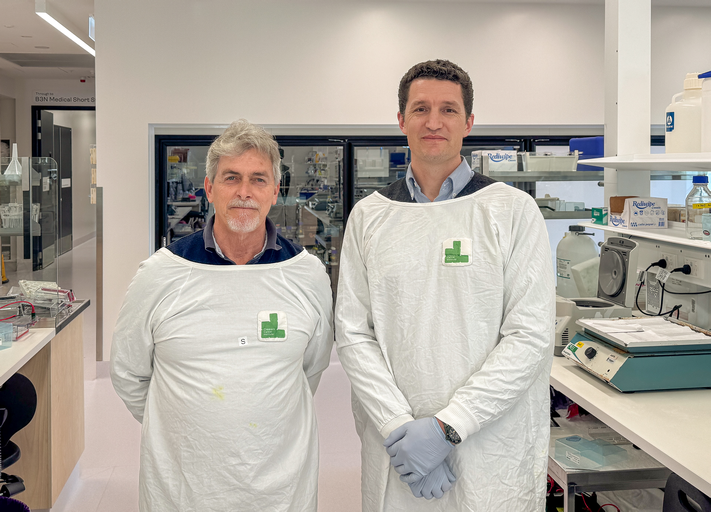
Michelle Haber, then Executive Director of Children’s Cancer Institute, and drug discovery scientist Ian Street were discussing a difficult reality: children with cancer often receive drugs designed for adults. These treatments can save their lives, but can also leave them with serious health problems for years to come.
Back in Australia, the conversation continued. Ian came out of retirement, bringing more than thirty years’ experience in helping turn laboratory discoveries into medicines. On a shoestring budget, Therapeutic Innovations for Kids began to take shape.
Antoine de Weck joined the Institute in 2022 after nine years at Novartis, where he worked on finding weaknesses in cancer cells that drugs could target. He now leads THINK alongside Ian, bringing that experience to the search for treatments designed specifically for children.
One of the biggest obstacles is economics. Developing a drug is expensive and risky. With far fewer children than adults diagnosed with cancer, the potential financial return often isn’t enough to attract commercial investment. Promising research can be left waiting.
THINK starts with a different measure of value: children’s lives and the years ahead of them.
The team looks for weaknesses in childhood cancers, then finds and develops compounds that could act on them. By testing ideas thoroughly at an early stage, they can set aside those unlikely to work and concentrate time and resources on the most promising possibilities.
Endorsed by
Children that develop cancer may survive, but they are unlikely to thrive. They will suffer impacts on their growth, intelligence, heart, hearing, fertility amongst other things. This is the range of things kids will have to live with for the rest of their lives as 90% will have some serious side effect by the age of 45 years.
Currently we use surgery, and we give kids chemotherapy and radiation. It is chemical warfare and for children, equates to nuclear warfare at a point when they are growing and changing. We need to find better ways of treating children, more precise, more effective and with fewer toxicities.
CCI is a really important player in the childhood cancer space, and the only organisation in the southern hemisphere making such progress. But we don’t want unique within the world, we want critical mass and we need organisations to be communicating together. That’s another area where CCI excel, the collaborations they have established, and their willingness to collaboration. I’ve known and worked with Ian Street for over 25 years. He’s an experienced drug hunter and the THINK team are strong collaborators contributing globally.
We don’t always know why kids get cancer so early, but we can’t keep giving them treatments designed for adults. These treatments have a disproportionate impact on them, not only because dosing and tolerance differs, but because their bodies, brains, immune systems and growth are still developing and the secondary effects are much more dire.
The urgent need is for drugs that are not so toxic for kids. Not only do we need to identify chemicals that won’t harm them so much, but, perhaps more importantly, we need to identify novel targets that are unique to childhood cancer.
I worked closely with Antoine de Werk in Europe for years. He has a very unique mix of expertise coming from a computational background from the field of big data and a talented biologist who has worked on large projects in the Crispr field. Antoine has combined these two areas of experience to fuel his research, making him a world-level drug discovery expert.
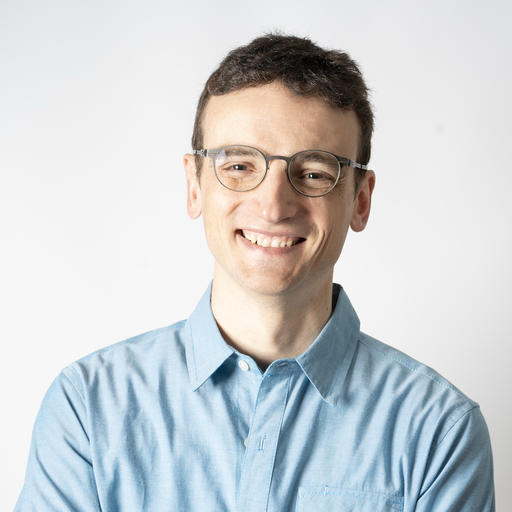
My prior field of research was small molecule drug discovery, technically aligned with what Antoine and Ian are aiming to achieve. I have worked in oncology business development for over 10 years.
Over the last 10 years I have led on the development and commercialisation of therapeutics in oncology, during which time Cancer Research Horizons (CRH) was collaborating with Ian on adult cancer oncology therapeutic projects. More recently I have helped lead the formation of CRH and Cancer Research UK (CRUK)’s childhood cancer therapeutic strategy, which allowed us to reconnect with Ian and the THINK team at CCI, including Antoine.
This has built long standing trust now focussed on the challenges of childhood cancer therapeutics and the approaches needed to address this difficult area of oncology.
Their combined experience is synergistic; with Ian’s many years of collaboration in adult cancer and Antoine’s expertise in data-driven driven drug discovery and the targeting of novel biological entities such as RNA-associated proteins and novel technologies. This synergy gives THINK and CCI a real cutting edge as we seek to address the significant technical and translational challenges in childhood cancer therapeutics.