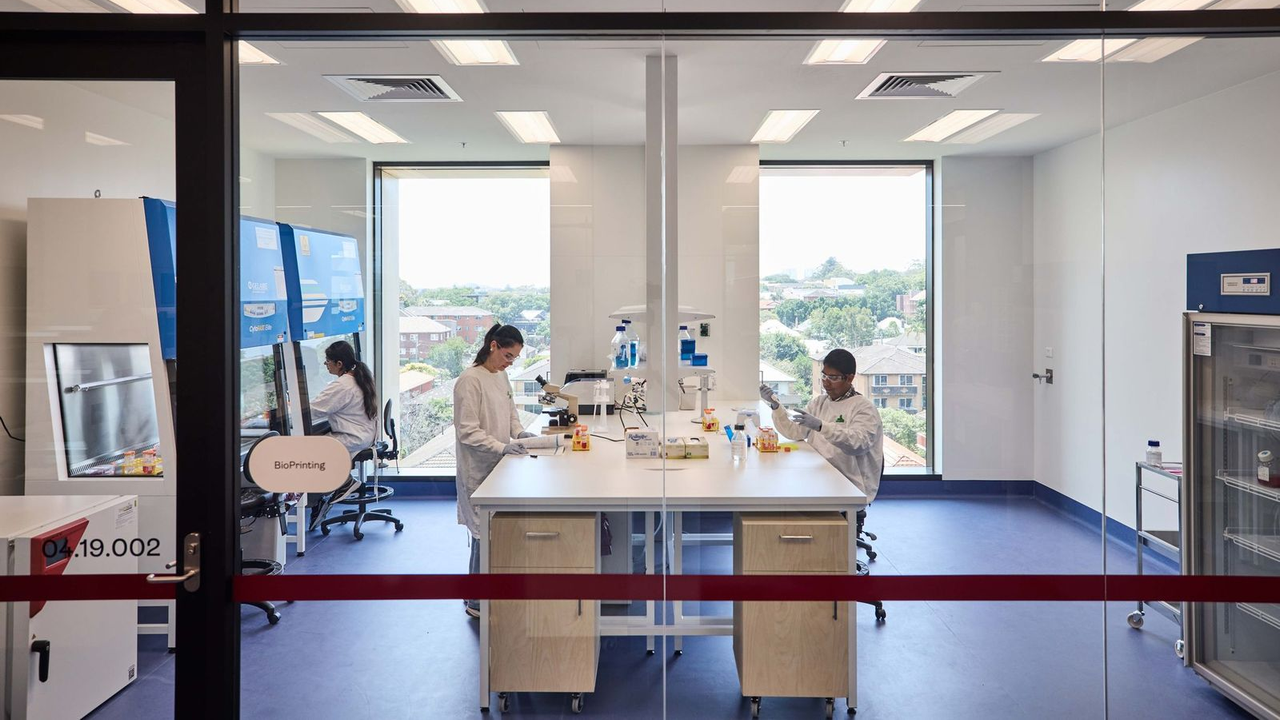
Thankfully, childhood cancer is rare. But in drug development, rarity is a problem: few patients mean little commercial incentive, and little incentive means children still receive hand-me-down medicines designed for adults. Solving that paradox is what our group’s work is about.
My route here began with studies in physics. I flirted with finance, but was frustrated that we could find patterns in data yet never rerun the experiment; the economy had already moved on. In science, a hypothesis can be tested again, and that ability to be proved wrong brought me back.
Biology, meanwhile, was generating vast amounts of data through advances in sequencing, the technology that reads genetic information, and needed the quantitative skills physics had given me. Cancer was particularly compelling: it is a disease of mutations, and mutations could now be measured. The laboratory offered a clear, testable outcome: killing cancer cells while leaving healthy cells alive.
I spent ten years in cancer drug discovery at Novartis. Moving to childhood cancer meant applying that experience where the gap between what patients need and what the market delivers is widest.
Children are not little adults. The mutations driving their cancers differ from those in adults, so adult drugs may not address the changes responsible for a child’s disease. Worse still, older chemotherapies damage children’s healthy cells as well as cancer cells, and survivors face secondary cancers, infertility and other health problems in adulthood.
That is the human cost of the commercial dilemma: developing new drugs is difficult to justify for a small market. But count instead in years - not only the years of life lost, but the years survivors live below their full potential because of the treatments that saved them - and the equation reverses. Few investments in medicine return more life per dollar.
This is what drew me to Children’s Cancer Institute (CCI) in Australia, where we work to discover targeted treatments that begin with the biology of children’s cancers. Our ambition is to help children survive with fewer of the lasting consequences treatment itself can leave behind.
The Zero Childhood Cancer Program (ZERO), co-led by CCI, helps us understand childhood cancers in far greater molecular detail. Sometimes that analysis reveals a mutation for which a targeted drug already exists, giving oncologists another option. More often, it does not. Of roughly 1,200 genes implicated in cancer, approved targeted drugs directly address only about 60. More mutations will only have clinical value if we expand the range of targets we can treat. Identifying what drives a cancer and having a drug that can act on it are two different things.
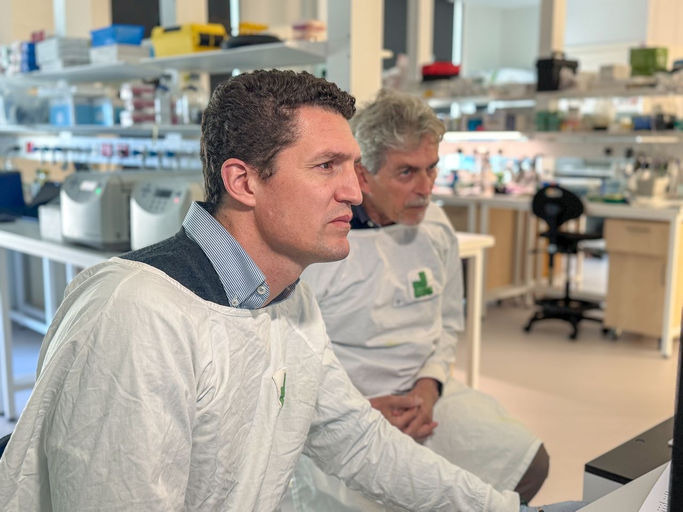
This is where THINK (Therapeutic Innovations for Kids) comes in: we take discoveries from identifying a target to a potential drug ready for clinical development. THINK is already up and running, with a small portfolio of projects moving forward.
ZERO gives us more than data to guide our work. Where material allows, patients’ cells can be grown to test potential drugs, so we work on cells that truly represent the disease children have today, not lines grown artificially for decades until they no longer resemble the cancers they came from. Expert collaborators will help move promising discoveries towards clinical trials.
Here, too, we confront the paradox I began with. Our approach is paediatric first: a childhood cancer need is what draws us to a target. But initially we are prioritising targets that may also be relevant to adult cancers, because that broader potential can make development commercially viable where a childhood-only market cannot. Our hope is to reinvest returns into childhood-only opportunities, using the economics of adult cancer to fund the medicines the market would never build on its own.
Drug discovery involves many failures: the chance that any one candidate fails remains high. We pursue multiple projects in parallel, so success does not depend on any single one - the logic that leads venture investors to back portfolios of startups. Our portfolio is still small, so a single setback can slow everything; the broader it grows, the stronger the path from a child’s cancer biology to potential treatments. Disproving an idea quickly is just as important: it lets us drop weaker approaches and move stronger ones forward. Each step still has to earn its place.
For me, the excitement comes when a hypothesis survives the next test and gives us a reason to continue. And the purpose never changes: treatments designed around the cancers children actually have, so that tomorrow’s children survive - and get to live every one of their years, fully.